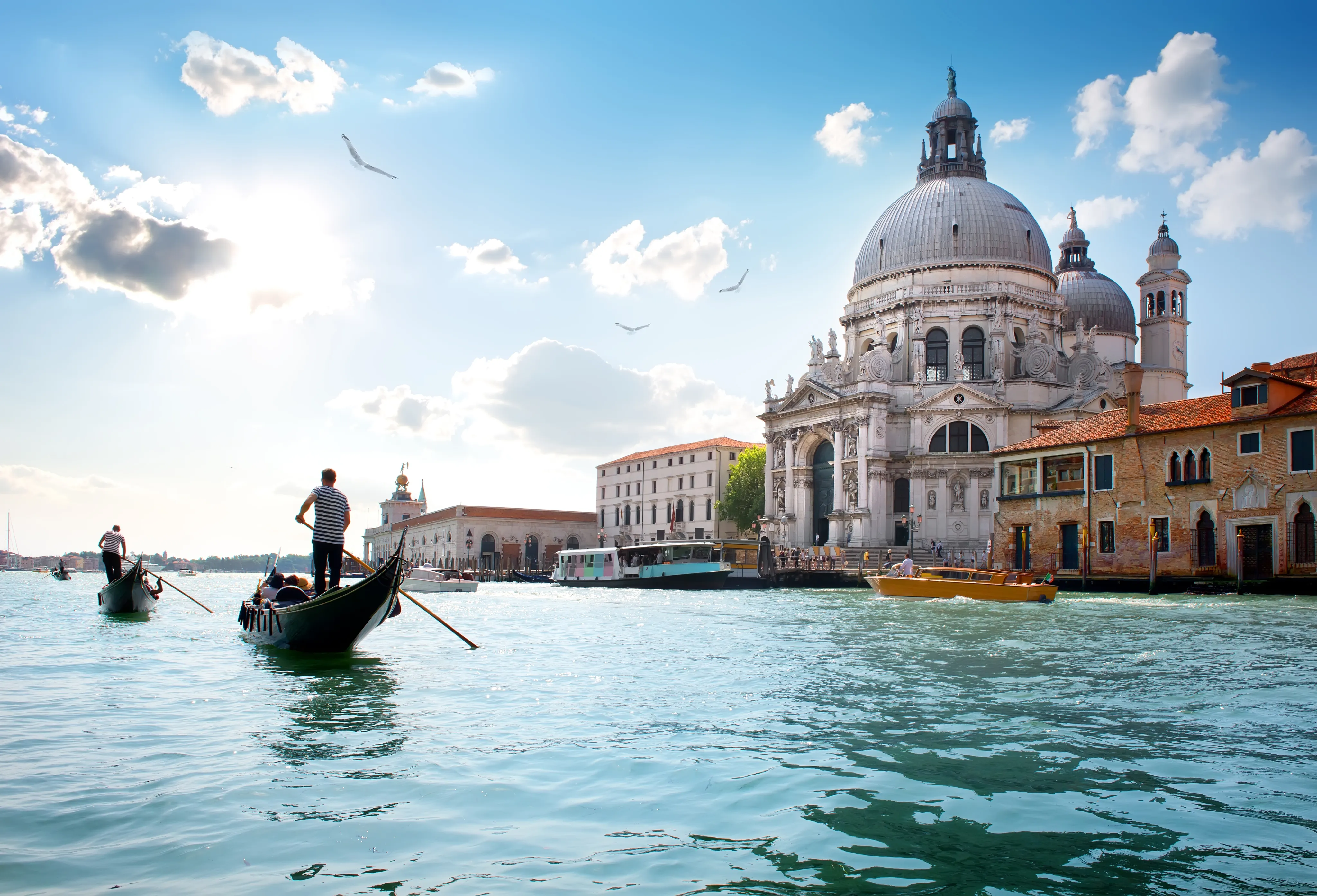
Rialto Market is Venice's working food market - open six mornings a week in San Polo, around Rialto Bridge, Campo San Giacometto and the market area. It is where Venetian residents, restaurant chefs and bàcaro owners still buy fish, vegetables and lagoon produce at dawn.
For visitors, it is the single best place to read the Venetian lagoon through what's on its stalls. This guide covers what to expect, what's in season month by month, and which guided experiences let you walk the market with someone who knows it.
Quick Facts
- Location: around Rialto Bridge, Campo San Giacometto and the market area
- Opening hours: Tuesday–Saturday, 7:30am–12:00pm for the Pescheria (fish market); the Erbaria (produce) extends a little later, into the early afternoon
- Closed: Sundays for the whole market; Mondays for the fish market
- Entry: Free, no ticket required
- Best time to visit: 9:00–10:30am on weekdays
- What to expect: an open-air market with the Pescheria under a neogothic loggia, the Erbaria along the Grand Canal, and historic bàcari around its perimeter
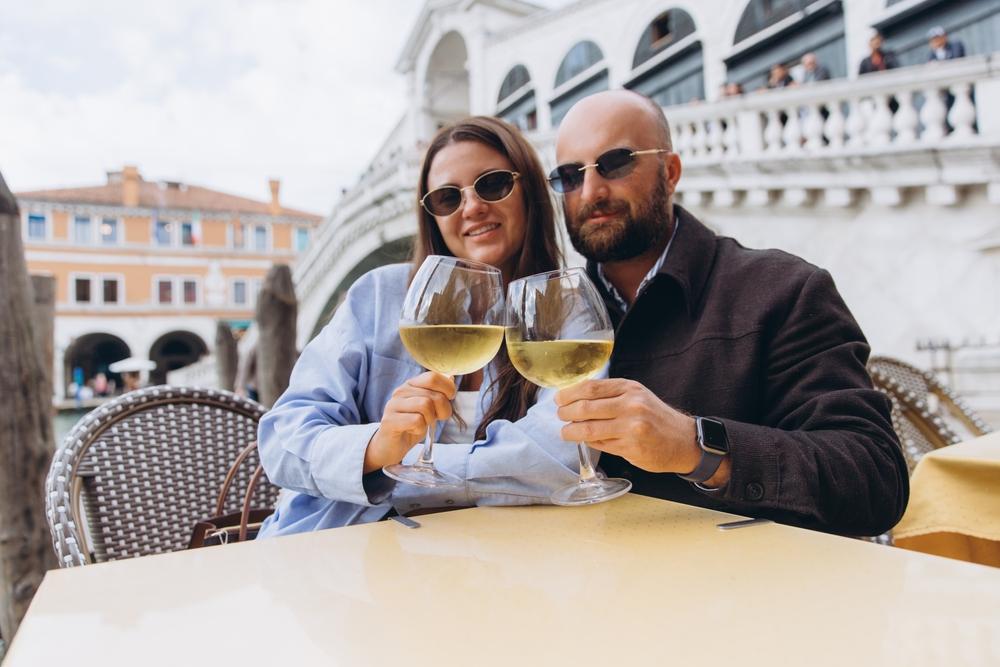
A 1,000-Year-Old Marketplace, Still Working
Rialto has been Venice's commercial heart since the 11th century. It owes its position to the Grand Canal, which made it reachable both for boats arriving from the lagoon and for merchant ships running the Republic's main maritime routes.
For most of the Serenissima's history, Rialto was not just a food market. It was a financial district. Warehouses, fondachi, money-changers and specialized shops were concentrated here, with separate zones for wine, spices, dairy, meat, precious metals and textiles.
Under the arcades of Campo San Giacometto, in 1619, the Banco del Giro opened - Venice's first public bank, founded to settle payments between merchants without the physical movement of coins. The arcades are still there. The function is gone; the spatial logic of the market is not.
On the wall of the Pescheria, a marble stele still lists the minimum legal sizes for several fish species - a centuries-old measure to prevent the sale of juvenile catch and protect the lagoon's reproduction cycles. It is one of the earliest documented examples of fishery regulation in Europe.
Erbaria and Pescheria: Two Markets in One
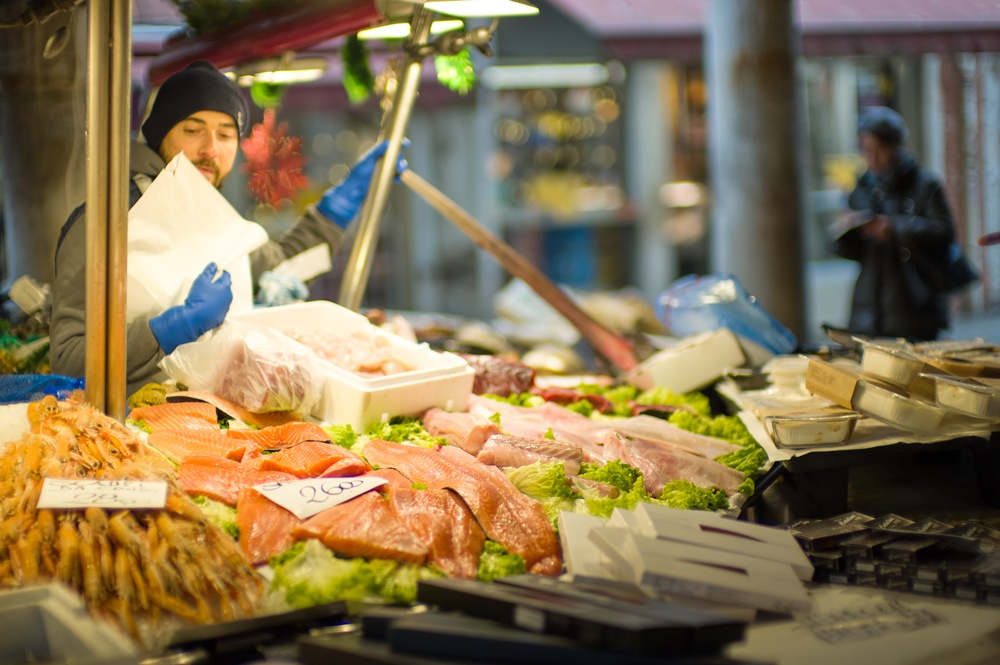
Rialto Market is divided into two main areas: the Erbaria for fruit and vegetables, and the Pescheria for fish.
The Erbaria runs along the Grand Canal. It is historically where vegetables, fruit, herbs and agricultural goods from the lagoon islands and the mainland fringe arrived by boat. Today it is also one of the most popular spots in Venice!
The Pescheria is the architectural anchor of the market. The current building, with its neogothic loggia and stone carvings of fish, crabs, shells and nets, was completed in the early 1900s - but it stands on a fish-trading site that has been continuously active for centuries. Under its arcades, the morning catch arrives from the northern and southern lagoon (Burano, Pellestrina, Chioggia) and from the Upper Adriatic.
If you arrive around 7:30am, you’ll find restaurant chefs selecting the morning’s catch. As the morning goes on, local residents begin to arrive; then, around midday, the Pescheria closes and the surrounding bàcari start to fill up. It’s this slow, natural transition that sets the rhythm of the day around the market.
What's in Season at Rialto in May (and All Year Long)
Seasonality at Rialto follows the lagoon, not the supermarket. Some of the most prized ingredients are available for two weeks a year. Here's what to look for, season by season.
Spring (March–May): castraure, moeche, sparesee
May is the most vivid month at Rialto. Three lagoon products peak:
- Castraure di Sant'Erasmo - the first violet artichoke shoots from Sant'Erasmo island. They are cut to allow the rest of the plant to develop the larger botoli later in the season, and they are available for 15 to 20 days only, between mid-April and early May. Eaten raw, sliced thin with olive oil, salt and lemon.
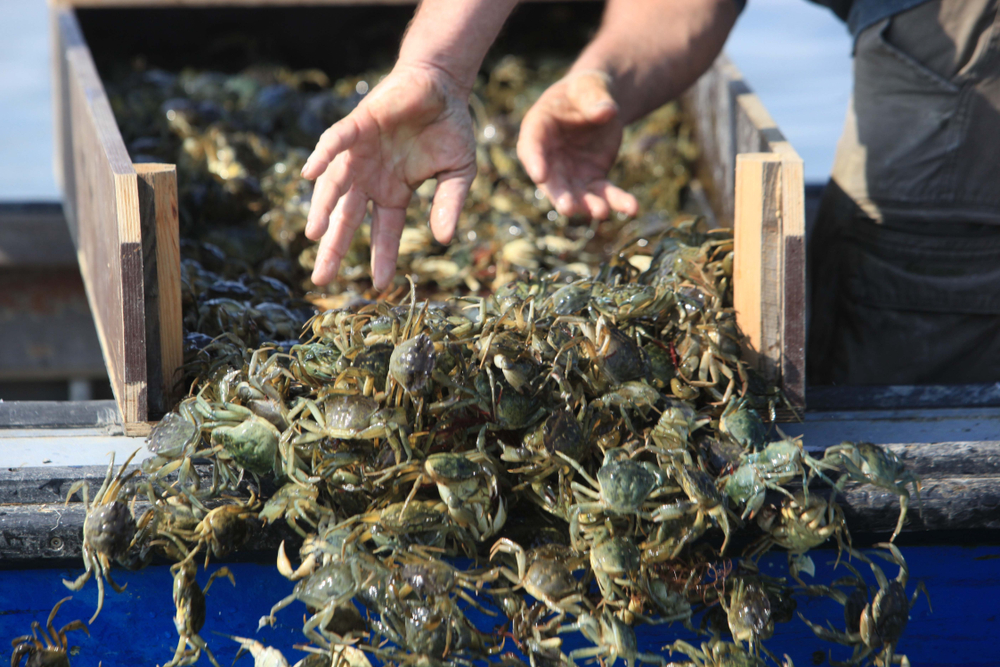
- Moeche - green crabs caught during the brief moulting window when their shell is soft. They are gathered by the moecanti of Burano and Pellestrina, who sort the crabs by hand to identify those about to moult. Fried whole in egg batter; one of the most local dishes a visitor can eat.
- Sparesee - wild lagoon asparagus, stronger and saltier than cultivated asparagus. The traditional preparation is in a frittata.
You'll also find white asparagus from Bassano del Grappa and the violet artichokes (botoli) that come right after the castraure window closes.
Summer (June–August): peoci, vongole, and the blue crab story
Summer brings shellfish: peoci (mussels), local clams, and the lagoon's seasonal pesce azzurro - sardines and mackerel, which feed into the sarde in saor tradition.
Summer is also when you'll see granchio blu (blue crab) on Rialto's stalls - an invasive species that has expanded rapidly in the Adriatic since 2023. Venetian chefs have responded by integrating it into menus: blue crab pasta, blue crab cicchetti, blue crab in saor. It's a case study in how the lagoon's cuisine adapts to ecological change in real time.
Autumn (September–November): schie, folpetti, gò
Autumn is the peak season for schie - the small grey shrimp of the lagoon, traditionally served warm over white polenta as schie con la polenta. Folpetti (small octopus) appear on bàcari counters served in guazzetto, with garlic and parsley.
This is also the month for the gò (lagoon goby), the small fish that gives the legendary risotto alla buranella its broth - a dish that has been served on Burano for over fifty years at the famous osteria Al Gatto Nero.
A second short window for moeche opens in late September and October.
Winter (December–February): masorin, cape sante, late-season radicchi
In winter the market shifts toward heartier flavors. Masorin (wild duck from the lagoon) appears on game stalls; cape sante (scallops) are at their best; and the radicchio tardivo di Treviso IGP - long, narrow, slightly bitter - peaks between December and February. Citrus from Sicily fills out the produce stalls.
A seasonal calendar for Rialto Market
Spring (March–May): castraure di Sant'Erasmo, moeche, sparesee, white asparagus from Bassano.
Summer (June–August): peoci, vongole, sardines, granchio blu.
Autumn (September–November): schie, folpetti, gò, early radicchio, a second short window for moeche.
Winter (December–February): masorin, cape sante, radicchio tardivo di Treviso IGP, Sicilian citrus.
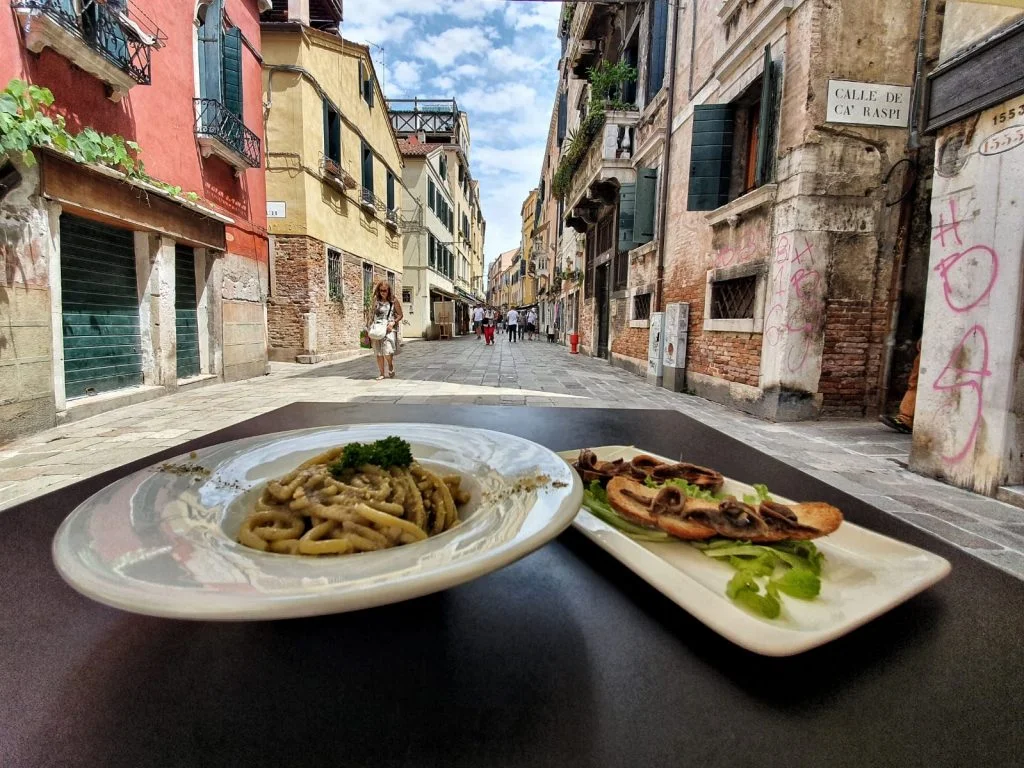
From Stall to Plate: Where to Eat What You Saw at Rialto
A handful of bàcari and restaurants buy directly from Rialto each morning and serve seasonal lagoon dishes. Four of them are within five minutes of the market.
Antiche Carampane - Known for moeche fritte in spring and for cassopipa, an old spiced fish stew from the Chioggia fishermen tradition. Reservations recommended.
Al Vecio Fritolin - A fritolin was historically a fried-fish counter for working Venetians. This restaurant carries that tradition into the present, with pesce povero dishes (anchovies, sardines, lagoon fish) and seasonal vegetables from Sant'Erasmo.
Cantina Do Spade - One of the oldest cantinas in Venice, founded in 1488. Bàcaro atmosphere, with a counter selection of fish-based cicchetti you choose by pointing.
All'Arco and Cantina Do Mori - Two historic bàcari at the heart of Rialto, both built around the morning's market purchases. Classic cicchetti: folpetti in guazzetto, sarde in saor, baccalà mantecato. Best visited between 11:00 and 13:00, standing at the counter.
If you want a guided introduction to this circuit rather than navigating it alone, the next section is for you.
Guided Experiences at Rialto Market
Three Venice Incoming experiences are built around the market - a private guided market visit with lunch, a cicchetti cooking class with a local chef, and a private bàcaro tour on request.
Rialto Market + Typical Lunch
A private guided walk through the Pescheria and Erbaria, followed by lunch in a local osteria with a seasonal menu drawn from the morning's market.
- Duration: 2h 30min
- Languages: English, Spanish, Italian
- Format: Private experience
- Start: 11:30am (not available Sundays and Mondays - the fish market is closed)
- Includes: guided market visit and lunch in a typical osteria
Venetian Cicchetti Cooking Class with a Local Chef
A four-hour class where a Venetian chef teaches you to prepare cicchetti - the small plates that fill bàcari counters at lunch and aperitivo. Can be combined with a market shopping session before the class, so you cook with the same ingredients Venetian bàcari are using that morning.
- Duration: 4h
- Languages: English, Italian
- Format: Private class
- Includes: hands-on preparation, recipes, and the meal you've cooked
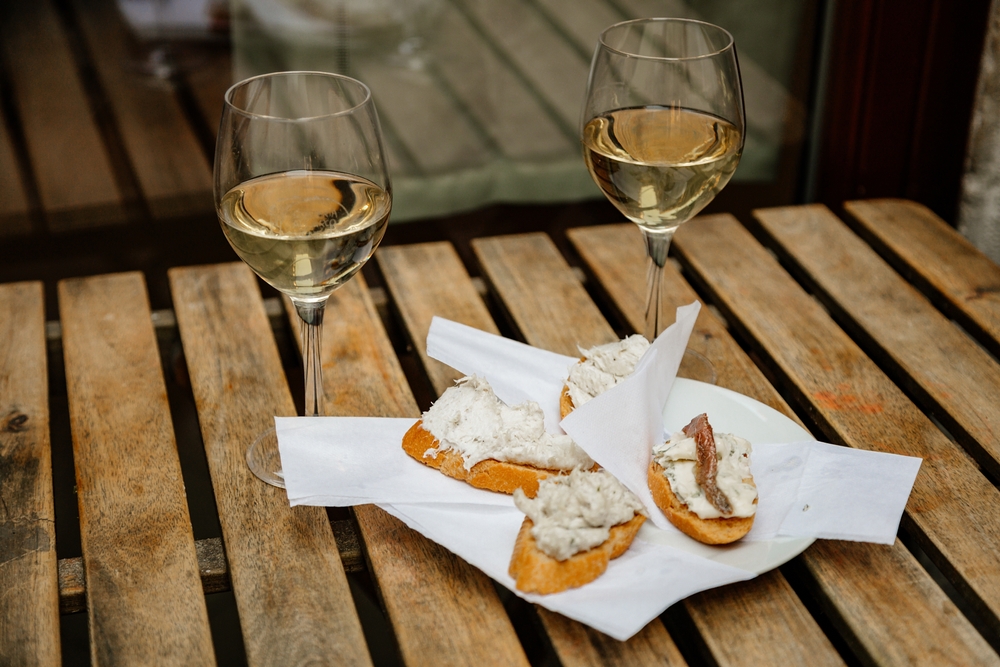
Private Bàcaro Tour with a Local
A custom bàcaro experience: a Venetian local accompanies you through the best historic bàcari around Rialto and Campo San Polo, with cicchetti and ombre at each stop. Available on request, designed around your group size and tastes.
- Format: Private, on request
- Tailored to: couples, small groups, food-curious travelers
What's Happening at Rialto in Late May 2026: Venice Wine Festival
The Pescheria hosts the Venice Wine Festival from 31 May to 2 June 2026.
Beyond its working function, the Pescheria has in recent years become a venue for citywide food and wine events. The Venice Wine Festival turns the loggia into a tasting hall for three days, with producers from all across Italy.
Practical Tips: When to Go, What to Skip
Visit Rialto Market on a weekday morning, ideally between 9:00 and 10:30. Skip Sundays (closed) and Mondays (fish market closed).
A few more notes from people who walk this market every week:
- Photographs are fine, but ask before close-up shots of vendors.
- The "tourist food" near the bridge - around the Rialto Bridge, many places cater to a more tourist-driven pace. But walk a few minutes into the streets of San Polo, and you’ll find more authentic bàcari, where the cicchetti still reflect the flavours of the market.
- Don't shop here for souvenirs. Rialto is a food-supply market, not a tourist marketplace. The Pescheria sells whole fish; the Erbaria sells produce. For Venetian-made objects, head to the Mercerie or to specialized artisan workshops.
- Plan the day around the market, not the other way around. The Pescheria closes by lunchtime, so use the morning for Rialto and the afternoon for the Doge's Palace, San Marco, or a gondola ride.
FAQ
What are Rialto Market's opening hours? The Pescheria (fish market) is open Tuesday to Saturday, 7:30am to roughly 12:00pm. The Erbaria (produce market) extends a little later, into the early afternoon. Both areas are closed on Sundays. The Pescheria is also closed on Mondays.
How do I reach Rialto Market from Santa Lucia train station? The fastest route is by vaporetto line 1 stop Rialto Mercato or line 2 stop Rialto - about 20 minutes. On foot it's around 25 minutes through Cannaregio and San Polo, well-signposted the whole way.
What's the difference between Rialto Fish Market and Rialto Market? Rialto Market is the umbrella term covering both the Erbaria (produce) and the Pescheria (fish market). "Rialto Fish Market" specifically refers to the Pescheria - the section under the neogothic loggia where fresh fish from the lagoon and the Adriatic is sold each morning.
Are there guided food tours that include Rialto Market? Yes. Venice Incoming offers a private guided market visit with lunch - Rialto Market + Typical Lunch - and a private bàcaro tour on request through the tailor-made experiences page.
Are there cooking classes that use Rialto Market ingredients? Yes. The Venetian Cicchetti Cooking Class with a Local Chef can include a market shopping session before the class, so you cook with the same ingredients Venetian bàcari are working with that morning.
When are the busiest days at Rialto Market? Saturday mornings are the busiest, with both residents stocking up and visitors. For a calmer experience, choose Tuesday, Wednesday or Thursday between 9:00 and 10:30am.
Plan Your Next Italian Adventure with a Trusted Local Partner
Wherever Italy calls you - through Venice’s quiet canals, the vineyards of the Veneto, or the country’s wider cultural landscapes - travel becomes richer with someone local by your side. With over 20 years of experience crafting journeys for travelers, groups, and global partners, Venice Incoming creates experiences that are seamless, authentic, and shaped by true on-the-ground insight.
Start planning your journey with our most useful resources:
- Multi-Day Travel Packages
- Tailor-Made Itineraries
- Daily Tours & Activities in Venice and Veneto
- Private Transfers Services
- B2B & Group Travel Support
Wherever you choose to go next, we’re here to help you experience Italy with confidence and local expertise.